
The Supreme Court of India has ruled that an appellate court convicting an accused for the first time in a criminal case must hear the accused on sentencing and cannot delegate the matter to a lower court.

Senior Trinamool Congress leader Kalyan Banerjee has commented on the Supreme Court judgment regarding the Special Intensive Revision (SIR) of electoral rolls, emphasising its specific application to the Bihar case and highlighting the Election Commission's limited authority in determining citizenship.

The Supreme Court has emphasised that the expert committee tasked with defining the Aravalli hills and ranges must consult domain experts and other stakeholders to ensure public input is heard.

The Supreme Court has agreed to examine a plea challenging the CBSE's policy mandating the study of three languages, including two native Indian languages, for Class 9 students starting July 1. The court has sought responses from the Centre, CBSE, and NCERT and will hear the matter in July.
The Supreme Court has directed the Uttar Pradesh DGP to form an all-women SIT to investigate the rape and murder of a four-year-old girl in Ghaziabad, following concerns about the local police's handling of the case and allegations of denial of treatment by private hospitals.

The Supreme Court has quashed the FIR against Elvish Yadav, who was arrested for allegedly using snake venom at a rave party in Noida. Yadav expresses relief and questions who will compensate for the harassment he and his family faced.

The Supreme Court has scheduled a July hearing for the Rs 500 crore money decree case involving Ras Al Khaimah Investment Authority (RAKIA) and industrialist Nimmagadda Prasad, following the failure of a mediation process led by former Chief Justice of India U U Lalit.
The Supreme Court has quashed an FIR and subsequent proceedings against YouTuber Elvish Yadav, who was arrested for allegedly using snake venom at a rave party in Noida. The court cited issues with the applicability of the NDPS Act and the validity of proceedings under the Wildlife (Protection) Act.

The Supreme Court has ruled that borrowers are not entitled to a personal hearing before banks classify their loan accounts as "fraud" under RBI directions, clarifying that a written response to a show-cause notice and access to the forensic audit report (with redactions) are sufficient for natural justice.

'My argument was straightforward: If the Constitution allows this reservation and SC/ST and OBC candidates are already getting reservation in private institutions -- backed by Constitution Bench orders -- then not extending the same to EWS candidates directly violates the 103rd Amendment and Article 14, which guarantees the right to equality.'
The Dudhwa Tiger Reserve administration has implemented a dusk-to-dawn ban on vehicular traffic on the Dudhwa-Gauriphanta road to protect wildlife, following a Supreme Court mandate. Emergency vehicles are exempt, and an alternative route is available.
The Jharkhand High Court has issued comprehensive directives for handling rape cases, mandating swift investigations, prohibiting the two-finger test, ensuring victim rehabilitation, and protecting victim identity. The court also directed support for children born out of rape incidents.

The Delhi High Court has directed the Wrestling Federation of India (WFI) to make a decision within two weeks on the show-cause notice issued to grappler Vinesh Phogat concerning alleged indiscipline and anti-doping rule violations. The court closed proceedings on Phogat's petition after her Asian Games selection trial grievance became infructuous, but she may file a fresh petition on broader selection policy issues.
The Supreme Court has directed the deletion of a Kerala High Court order that placed the state Waqf Board under the supervision of a joint secretary, thereby restoring the Board's autonomy. The apex court modified the high court's interim order, allowing the joint secretary to remain a board member but removing any supervisory capacity.

The Supreme Court has ruled that the determination of citizenship status in India must adhere to a fair, lawful, and reasoned process, setting aside Gauhati High Court verdicts that had affirmed orders declaring some individuals as foreigners. The court stressed that constitutional protections of equality, life, and personal liberty apply to every person within India's territory.
The draft regulations for use of AI in courts 'shall apply to the use, deployment, or integration of AI in any judicial, adjudicatory or administrative function of the Supreme Court of India, high courts, and all courts including the Tribunals and statutory Commissions performing adjudicatory functions, within the territory of India'.

The Supreme Court has directed the Uttar Pradesh government's Special Investigation Team (SIT) to submit a status report on the alleged embezzlement of donation money at the Ram temple in Ayodhya. The court also issued notice to the Shri Ram Janmabhoomi Teerth Kshetra Trust following pleas for a fair and time-bound probe, including demands for a CBI investigation and a CAG audit of the temple trust's finances.

Karnataka Governor Thaawarchand Gehlot has suspended KPSC Chairman Shivashankarappa S Sahukar following allegations that he facilitated the illegal selection of his two daughters as Industrial Extension Officers. The Governor has also recommended to the President that the matter be referred to the Supreme Court for an inquiry under Article 317(1) of the Constitution.

The Supreme Court has given the Odisha government one month to decide on the remission plea of Ravindra Pal, alias Dara Singh, who is serving a life sentence for the 1999 murders of Australian missionary Graham Stuart Staines and his two minor sons.

The Supreme Court has issued a directive to the Bihar government, ordering the removal of all unauthorised structures and encroachments along the Ganga river banks between Nauzar Ghat and Nurpur Ghat in Patna within six weeks. The court expressed concern over illegal constructions and noted the lack of action despite previous orders, warning of strict views on any laxity. The directive came during the hearing of a plea against a National Green Tribunal order regarding encroachments on eco-fragile floodplains.
The Supreme Court has agreed to hear a plea by senior advocate Kapil Sibal challenging the interpretation of the Tenth Schedule's 'deemed merger' provision, which allows MLAs and MPs to avoid disqualification under the anti-defection law, citing its 'huge repercussions on our polity'.

The Supreme Court on Tuesday refused to entertain a plea by the DMK questioning Tamil Nadu Chief Minister C Joseph Vijay's scheduled meeting with the families of Karur stampede victims, stating that the court cannot regulate the executive head's visits.

The Delhi High Court is hearing a Public Interest Litigation (PIL) challenging the "intrusive surveillance" of protesters at Jantar Mantar. The Solicitor General argued that videography is for law and order, not snooping, while the petitioner contended it violates privacy. The court has asked police about protest regulation guidelines.

The Supreme Court has issued interim directions regarding nationwide protests over the NEET paper leak, ordering the release of minor student protesters without criminal records and directing states to preserve all digital evidence. The court also called for a fair and independent investigation into allegations of police excesses against students, while also acknowledging concerns for injured police personnel.

The Vishva Hindu Parishad (VHP) has strongly criticised the Faizabad Bar Association's resolution to prevent advocates from representing those accused in the alleged theft of donations from the Ram Janmabhoomi temple, calling the move 'unethical and unlawful' and a violation of constitutional principles and professional ethics.

The Delhi High Court has directed city authorities to develop a strategy for implementing the Supreme Court's directives on open correctional institutions, focusing on identifying prisoners suitable for transfer.
'A rigid or overly broad interpretation could lead to a chilling effect on investments and growth in sectors traditionally driven by private initiative.' 'Entrepreneurs may fear that their assets could be arbitrarily appropriated by the State under the guise of serving the 'common good' without sufficient legal safeguards.' 'The judgment thus supports a more nuanced view, one that balances individual property rights with public welfare objectives.'

The Supreme Court highlighted the critical need to protect forests across India, specifically mentioning states like Jharkhand for their natural ecosystems. The court declined to interfere with a Jharkhand High Court order concerning regulations for stone mining and crushers near forest boundaries, asserting the High Court's constitutional authority in the matter.

A Munsiff court in Kerala has ordered the eviction of Dalit families living at Pariyathukavu near Kizhakkambalam by May 23, following a Supreme Court order recognising private ownership of the land.

The Supreme Court has directed an appellate tribunal to expeditiously decide an appeal filed by a 75-year-old advocate challenging the deletion of his name from the West Bengal voters' list following a Special Intensive Revision exercise. The court noted the petitioner appeared to be a bona fide resident and requested a decision within two months.

The Madhya Pradesh cabinet has approved the draft Uniform Civil Code (UCC) bill, which will be introduced in the state assembly's monsoon session. The proposed legislation, excluding the tribal community, addresses marriage, live-in relationships, adoption, and inheritance, aiming for women's empowerment and social harmony. Chief Minister Mohan Yadav highlighted broad support and criticised the Congress for its stance.
The Supreme Court of India has directed all states and Union territories to operationalise a single helpline number '112' for emergency responses and establish a functional good samaritan grievance redressal system within three months, emphasising that the right to trauma care is an integral part of the right to life.

The Delhi High Court has reaffirmed the All India Tennis Association's (AITA) General Body's authority in amending its constitution, directing that proposed changes be put to a clause-by-clause vote by members. This interim order modifies a single judge's ruling, ensuring the federation's democratic processes are maintained while complying with new sports governance laws, with fresh elections mandated by September 30.
The Supreme Court of India has issued a strong warning against the use of "non-existent, fake, and hallucinated" judgements generated by artificial intelligence (AI), likening it to "the release of methyl Isocyanate in the province of law and justice: invisible, insidious, and catastrophic." The court set aside an NCLT verdict that relied on such AI-generated precedents.

The Supreme Court of India has strongly condemned the disclosure of a rape victim's identity and directed all high courts to ensure the anonymity of survivors and their families in court orders, citing the deep stigma associated with such offences and existing legal provisions.

The pleas challenging SIR claimed that the Election Commission does not have powers under Article 326 of the Constitution, the Representation of the People Act, 1950 and the Rules made under it to carry out SIR in a larger form.
An RTI query reveals that only a fraction of Delhi's police stations have paralegal volunteers, and their assistance to POCSO victims is minimal, despite Supreme Court directives.

The Supreme Court dismissed Congress leader Meenakshi Natarajan's challenge to her rejected Rajya Sabha nomination, reaffirming that the Election Commission is the sole recourse for such disputes and citing Article 329(b) of the Constitution which bars judicial interference in electoral matters.

The All India Football Federation (AIFF) will hold a Special General Body Meeting to amend its constitution in line with the National Sports Governance Act and discuss the new commercial partner for the Indian Super League.
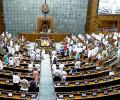
The dramatic postponement came while members were voting on the committee's five principal recommendations, making it an unprecedented moment in the functioning of a parliamentary committee.
